ReThink Forum
Nature-Positive Development: How Can Cities Integrate Biodiversity, Climate Resilience and Urban Growth?
10 Sep (Thur) Day 1 : 16:15 – 17:05
Nature-positive development is becoming essential for Hong Kong as extreme heat, storm surges and biodiversity loss intensify. This session examines how businesses, planners and asset owners can incorporate blue-green infrastructure, urban greening, biodiversity restoration and nature-based solutions into long-term strategies. Panellists will explore regulatory trends, ecosystem-service valuation, and opportunities for corporate investment in urban resilience. The conversation highlights how integrating nature into urban systems can reduce risk, enhance wellbeing, and complement carbon-reduction efforts across the city.
Session Learnings:
- Understand nature-positive strategies relevant to dense urban environments.
- Identify resilience benefits from integrating blue-green solutions.
- Recognise business value from biodiversity-aligned planning.
Post-Event Actions:
- Incorporate nature-positive metrics into sustainability reporting.
- Assess assets for blue/green enhancement opportunities.
- Engage with local partners to support ecosystem restoration initiatives.
Speakers
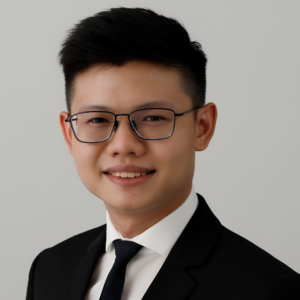
Moderator
Scott Lim
NbS Project Manager
The Nature Conservancy
Scott Lim
The Nature Conservancy
NbS Project Manager
As a Chartered Environmentalist (CEnv) and sustainability practitioner, I lead the development and scaling of Nature-based Solutions (NbS) to address climate resilience across Hong Kong and the Greater Bay Area in my role as Project Manager at The Nature Conservancy. My work focuses on shaping how NbS is integrated into policy, planning, and investment decisions, working at the intersection of government, finance, and on-the-ground implementation.
I specialise in translating science into action at scale—designing and delivering flagship NbS pilots, influencing regional strategies, and convening cross-sector partnerships to drive adoption. This includes working closely with government agencies, local communities, and international partners to embed NbS into real-world projects with measurable biodiversity and climate outcomes.
My strengths lie in strategic positioning, stakeholder alignment, and execution under complexity, with a strong focus on moving from concept to implementation. I am particularly passionate about advancing NbS financing and delivery models, and enabling ecosystems where public, private, and community actors can collaborate effectively to scale impact.
My Sustainability Goals for 2026:
1. Mainstream nature-based solutions in Hong Kong’s climate resilience and development projects
Success looks like: More hectares of wetlands, rivers, and coastal habitats restored; increased public and private investment in NbS; and clear integration of NbS into government planning, infrastructure, and development projects.
2. Foster stronger public-private-community partnerships for sustainability action
Success looks like: More cross-sector partnerships established, greater co-investment in sustainability initiatives, and more collaborative projects progressing from planning to implementation.
3. Build a culture of stewardship where more people actively care for and restore nature
Success looks like: Higher participation in conservation and restoration activities, more community-led stewardship programs, and stronger public awareness and support for nature-positive solutions.
Speaking at 2026 sessions:
Day 1
Nature-Positive Development: How Can Cities Integrate Biodiversity, Climate Resilience and Urban Growth?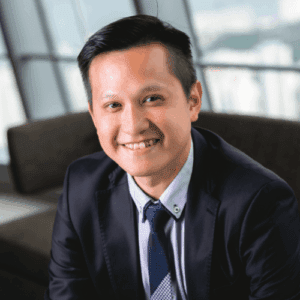
Patrick Ho
Head of Sustainable Development / Member of TNFD
Swire Properties Limited

Patrick Ho
Swire Properties Limited
Head of Sustainable Development / Member of TNFD
Patrick is responsible for formulating and executing the Sustainable Development 2030 Strategy for Swire Properties’ global operations across Hong Kong, Chinese Mainland and U.S.A. portfolios. Through engaging stakeholders, setting science-based targets and developing action plans, he leads a team to manage the full spectrum of the Company’s environmental, social and economic impact and to integrate ESG considerations into every facet of the Company’s business.
My Sustainability Goals for 2026:
- Guided by the Sustainable Development 2030 Strategy, continue to pioneer sustainable business practices, adopt innovative technologies, and actively share best practices with the business community.
- Engage actively with stakeholders in HK and the broader region to foster partnerships and develop collective solutions for the net-zero and nature-positive transitions.

Benni Pong
Vice President
Hong Kong Institute of Landscape Architects
Benni Pong
Hong Kong Institute of Landscape Architects
Vice President
Benni is the Vice President of the Hong Kong Institute of Landscape Architects (HKILA) and Deputy Chair of the Executive Organizing Committee for International Federation of Landscape Architects (IFLA) World and Asia-Pacific Regional Congress 2026.
He is a Registered Landscape Architect who received his Master of Landscape Architecture (MLA) with distinction from the University of Hong Kong (HKU) and Master in Design Studies (MDes) from the Harvard University Graduate School of Design (GSD).
He has 17 years of practising experience in landscape architecture and involved in a number of awarded projects. His professional practice has ranged from public space design to urban design and landscape planning of major developments incorporating nature-based solutions, blue-green infrastructure and resilient design initiatives. His works have been featured in the 2022 Hong Kong Shenzhen Bi-City Biennale Urbanism \ Architecture and 2019 Beijing International Horticultural Exposition. Recent design awards include the International Design Award (IDA), Architizer A+ Award, the Hong Kong Institute of Architects (HKIA) Special Award and HKILA Awards.
His researches examine and experiment spontaneous landscape, urban ecology, perception of space, cultural landscape and design anthropology and are published and presented in Landscape Review, HKIA Journal, HKILA Journal Yuan Lin, Landscape Architecture Frontier (LAF), Council of Educators in Landscape Architecture (CELA) Annual Conference 2026 and 60th IFLA World Congress 2024.
My Sustainability Goals for 2026:
1. Foster Interdisciplinary collaborations and strategic partnerships to mainstream and scale up Nature-based Solutions (NbS) across Hong Kong and the Greater Bay Area.
2. Strengthen capacity building and enhance public awareness of the interconnection between nature and culture, with a particular focus on advocating for cultural landscapes and the Historic Urban Landscape (HUL).
3. Advance advocacy for urban nature and promote ecological and landscape design in development projects to enhance biodiversity and improve human well-being.
Speaking at 2026 sessions:
Day 1
Nature-Positive Development: How Can Cities Integrate Biodiversity, Climate Resilience and Urban Growth?Supported by
The Nature Conservancy
The Nature Conservancy (TNC) is a global conservation organization dedicated to conserving the lands and waters on which all life depends. Guided by science, we create innovative, on-the-ground solutions to our world’s toughest challenges so that nature and people can thrive together. We are tackling climate change, conserving lands, waters and oceans at an unprecedented scale, providing food and water sustainably and helping to make cities more livable. Working in more than 81 countries and territories, we use a collaborative approach that engages local communities, governments, the private sector, and other partners. TNC has been in Asia Pacific for almost 30 years, with projects in Australia, mainland China, Hong Kong, Indonesia, Mongolia, New Zealand, and the Pacific Islands. In 2019, TNC was awarded the Lui Che Woo Prize for Sustainable Development. To learn more, visit www.tnc.org.hk
Legal Name: The Nature Conservancy Hong Kong Foundation Limited
General Enquiry Email Address: hkmkt@tnc.org
General Business Address: Unit 2107-08 Prosperity Millennia Plaza, 663 King’s Road, North Point, Hong Kong